
A poker Discord community works because it makes table language audible before a player acts on it. Cash game, Sit & Go, fast-fold, bounty, position, blind level: these words can sound flat in a glossary. In a busy chat, they appear inside questions, small reactions, short clips, and event reminders. That is where casual players begin to understand the shape of the game.
Online communities are useful for poker because they turn scattered interest into repeated contact. An open-access PLOS ONE study describes online communities as spaces where people share interests, support others, and exchange knowledge and information, which explains why Discord fits hobbies built around live decisions. A server can keep a topic warm between sessions without making newcomers read a long manual first.
Where Chat Becomes the Table
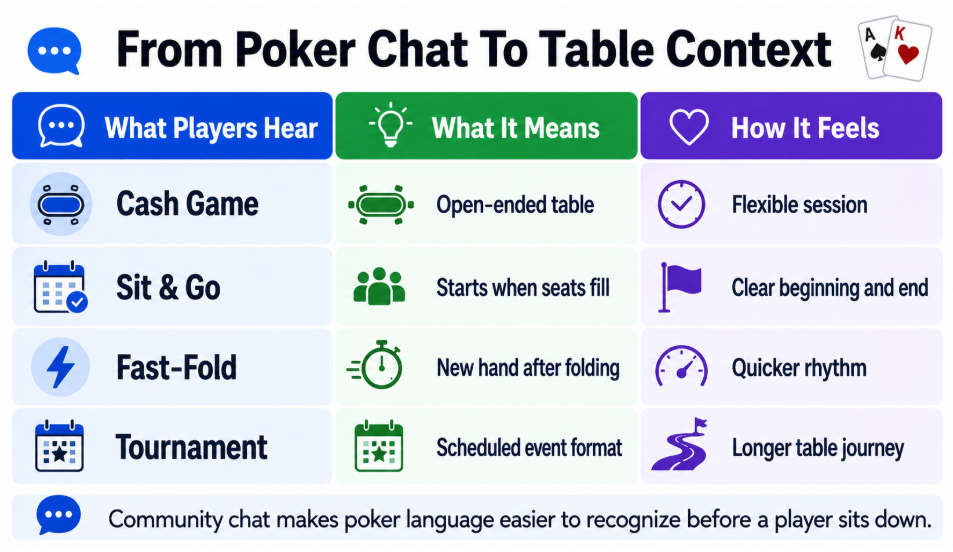
Discord can make poker language familiar, but table context is what makes the terms useful. A player may see people talking about cash games, Sit & Go’s, faster hand flow, knockout formats, or tournament timing in a chat thread, then still need to understand what those words change in actual play. The difference is not cosmetic. Each format affects how long a session feels, how quickly decisions arrive, how much waiting is involved, and how people talk about the hands afterward.
A dedicated online poker page gives those community conversations a clear reference point because it gathers the main formats in one place. The page presents poker as its own destination with Play Online and Download access, learning material, tournament information, and named formats, such as cash games, Zone Poker, Sit & Go’s, multi-table tournaments, Mystery Knockouts, and Incognito Poker. That range is useful for anyone trying to connect Discord language to real table rhythm.
A cash game is open-ended, so the conversation around it often centers on single hands and table flow. A Sit & Go has a cleaner beginning and end because it starts once the table fills. Zone Poker moves players quickly into the next hand after folding, which explains why chat around it may focus on pace and repetition. Multi-table tournaments feel more event-based, while Mystery Knockouts add another layer to the tournament structure. For a casual player hearing these terms in a community thread, online poker becomes easier to understand when the formats are seen side by side. When online poker comes up again in the chat, the phrase has more shape: it points to different session lengths, decision rhythms, and ways of following the game.
This Instagram post about a Discord channel carries the same idea into social media. Its “Find Your Community” message fits the way poker discussion now moves between posts, chat spaces, and actual table formats. A player might first notice the Discord invitation on Instagram, join a conversation, see other people mention a format, then return to the poker page with a clearer sense of what those names mean. The chat does not replace the game. It gives the language somewhere to settle before the player meets it at the table.
Why Discord Suits Casual Poker Learning
Poker can be awkward to learn because small decisions carry unfamiliar names. A beginner may know the basics of private cards and shared cards, then get lost when a thread moves from blinds to position to tournament levels. Discord helps because it lets people learn at a softer pace. They can read first, ask questions, or search for an older exchange before joining the conversation.
That quiet watching is part of how hobbies stick. People notice which questions keep coming up, how regulars explain a term, and what situations make the room pay attention. Poker has always had that side conversation around home games and live tables. Discord just makes it easier to find on a phone.
The Best Servers Keep the Game Understandable
A useful poker Discord does not need nonstop chatter. It needs clear talk. Newer players benefit when formats are discussed plainly, especially when the same word can feel different in a cash game, a Sit & Go, or a tournament.
The best spaces leave room for basic questions, keep event reminders easy to spot, and stop side chatter from burying useful threads. That balance matters. A loud server can make poker feel harder. A clear one makes the next table or discussion easier to follow. That is the real value for beginners.
From Social Post To Poker Routine
Poker communities are moving into Discord because players no longer gather in only one place. The conversation now stretches across short videos, Instagram posts, Discord servers, poker pages, and the table itself. That does not make the game less focused. It gives players more entry points.
For casual players, the best routine is simple: learn a term, see it used by real people, then connect it to the format where it matters. A Discord server can make a word familiar. A poker page can show what the word means in practice. A social post can remind people that others are following the same path.
The strongest spaces respect that rhythm. They do not drown the player in chatter. They help the player return with better questions, clearer expectations, and a sharper ear for the language of the game, a pattern echoed in Frontiers research on sense of virtual community and user engagement.