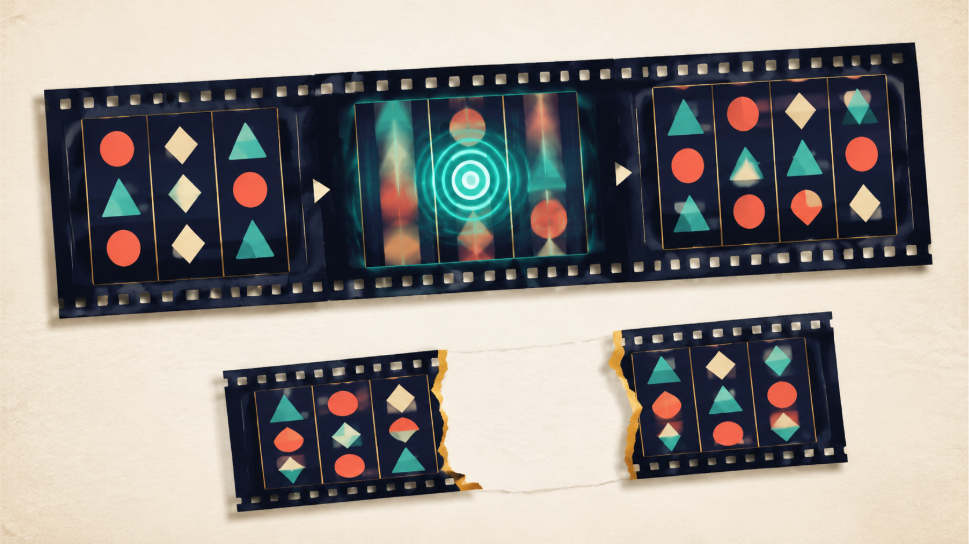
When casino footage appears in a Story, Reel, or short video, a smooth edit can feel complete, even when the decisive action happened offscreen. A clip may show a spin, deal, card reveal, dealer gesture, or celebration. It cannot show the whole round if it begins after the setup, skips the player’s action, or cuts away before the visible response. Three stages separate a complete sequence from a fragment: the starting position, the action, and the result. An attractive edit may preserve one stage while removing the other two.
People watch gaming videos for different purposes, and those purposes shape what editors keep. A 2025 survey of YouTube gaming audiences cites earlier research in which 64% of 1,000 gamers used YouTube to discover games. In the newer survey, guides and tutorials were the most popular content type at 47%, while reviews and funny moments reached 40%. A tutorial may repeat one control input. A review may cut among several sessions. A funny moment may preserve a reaction while removing the routine actions around it.
Follow One Round from Start to Finish
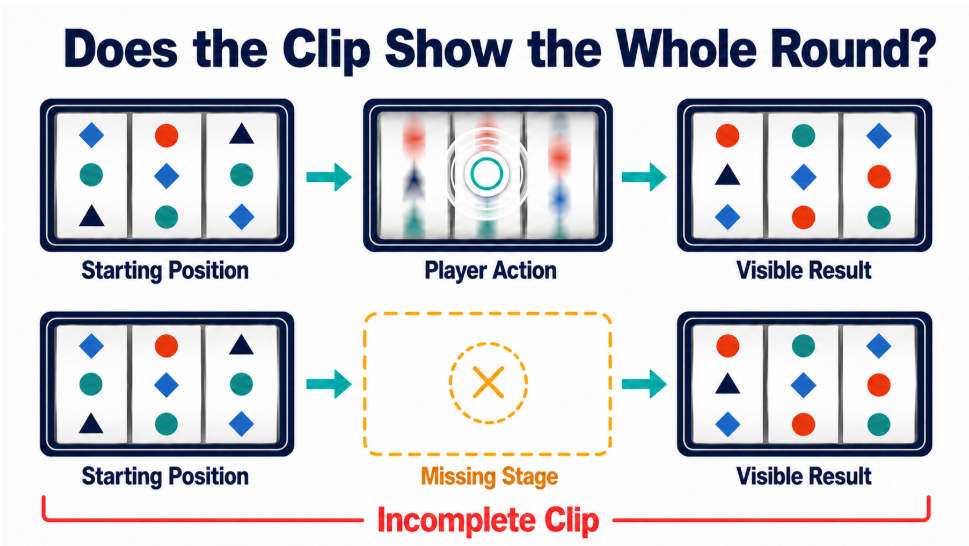
A casino clip shows a complete round only when one sequence can be followed from its opening state to its visible resolution. In a slot clip, the display should be visible before the spin begins, followed by the initiating action, the reels in motion, and the final arrangement.
Suppose a short recording captures a slot round played at mbitcasino. If it opens with the reels already slowing, the player’s action and the earlier display are missing. If it stops during a celebration, the settled result may also be absent. A card table clip needs the same continuity: the cards or wagers already in view, the next player or dealer action, and the response that follows. Captions can identify an omitted step, but they cannot place it back on screen. The footage may accurately preserve the sound, animation, or most dramatic moment while remaining unable to establish the complete order of that round.
Similar Clips Can Serve Different Purposes
A trailer establishes a subject, mood, or identity by combining selected moments. A tutorial explains a procedure, so it may pause, repeat, zoom in, or remove inactive time. A highlight keeps an event judged worth sharing and usually discards ordinary play on either side.
In the below video, the introduction uses retro gaming references and quick cuts before describing subjects intended for later videos. It has a recognizable beginning and ending as an introduction, but it contains no playable starting state, player action, or resolved casino round. The cuts establish the channel’s subject and tone rather than preserve continuous play. Its purpose is to introduce a site, not show off a game in action, so it does its job effectively. Promotional montages follow the same pattern when they contain reels, cards, controllers, or reactions, but never keep one game action on screen from setup to result.
It's also worth noting that a clip's duration does not determine what its purpose is or how well it fulfills it. A 20-second recording can show a complete simple action when nothing essential is removed. A two-minute montage may remain fragmentary if it jumps among games, sessions, or moments. Captions and voice-over can restore background information, but they do not restore an action that never appears on screen. They add an account of what happened while the footage itself remains incomplete.
Check the First and Last Frames
Returning to the first frame reveals whether the setup is already underway. Reels that are moving, cards that are being turned, or an animation already in progress indicate that an earlier action has been omitted. The next check is the input that changes the state: a tap, choice, deal, spin, or visible dealer action. The final frames should show the screen or table after that input has taken effect.
Cropping can create another gap. A finger may tap outside the frame, or an overlay may cover the final display, leaving the action or result unseen despite continuous playback.
Consider a clip that begins with three reels slowing down, holds on a matching line, and ends with a celebration. The final response is visible, but the pre-spin display and initiating action are absent. It records presentation and outcome feedback, rather than a whole round. Another clip might begin before the input, keep the relevant display in view, and end after the response settles. All three stages are then present. That evidence applies only to the recorded sequence; it says nothing about what may happen in a later round.
Discovery Is Different From a Complete Record
A short video often points toward longer material. Reuters reported in August 2026 that a media researcher described TikTok, Instagram Reels, Facebook, and YouTube Shorts as trailers that drive audiences toward microdrama apps. Those clips can introduce a story, character, or style without carrying the surrounding narrative. Casino footage can perform the same discovery function while remaining incomplete as a record of play.
The first frame, the initiating action, and the settled result provide a quick test. If the beginning is assumed, the middle is skipped, or the ending is detached, the recording is better described as a trailer, tutorial fragment, or highlight. A complete casino clip allows one round to be traced from its starting position through the action to the visible response, without captions or memory filling the missing space.